Burger King Nutrition Menu: Healthy_ Choices Guide
Looking for the Burger King Nutrition Menu and quick calorie guidance? The Burger King Nutrition Menu shows item-level calories and nutrients. This helps you pick smarter meals. For example, the Whopper lists about 660 kcal, while a Whopper Jr. is roughly 310 kcal.
This introduction gives clear Burger King calorie information and Burger King nutrition facts up front. So, you know what to expect before you order.
This guide summarizes official sources: Burger King’s corporate nutrition matrix (April 2020). It includes calories, fat, sodium, carbs, fiber, sugar, and protein. Plus, independent analyses that flag lower-calorie breakfast picks and sensible swaps.
It uses item-level numbers to recommend choices and practical modifications. For example, the Whopper has 660 kcal / 980 mg sodium, while the Whopper Jr. has 310 kcal / 390 mg sodium. Hamburger ~240–250 kcal / ~380–560 mg sodium.
Readers will find calorie-smart options, sodium and saturated-fat alerts, keto and high-protein tweaks, lower-sugar desserts and beverages, healthier kids’ meal ideas, and ordering tips. These tips help lower calories and sodium.
The article includes structured tables with Item | Price | Calories | Vegan/Keto/Gluten-Free Options | Allergens for 15–30 menu items. Plus, a clear dietary breakdown for each entry.
The tone is friendly and professional. The guide speaks like a knowledgeable companion, helping you use Burger King nutrition facts to meet daily goals. If you want a quick answer now, use smaller sandwiches like the Whopper Jr. or a plain hamburger. Skip high-calorie shakes, and choose grilled over crispy options to cut calories and sodium.
Now that you have the essentials—Burger King Nutrition Menu, Burger King calorie information, and Burger King nutrition facts—proceed to the next section. Learn how to read the nutrition matrix and plan meals that fit your goals.
Understanding the Burger King Nutrition Menu
Want to know about Burger King’s menu and what the numbers mean? This section will guide you. It explains where the data comes from, which nutrients to watch, and how to use the nutrition info when ordering.
Where Burger King nutrition facts come from
Burger King’s nutritional content is from Burger King Corporation. It’s based on supplier reports, lab tests, and software like ESHA Research Genesis R&D. The values are for “as served” items.
Local changes or substitutions can affect the numbers at the restaurant. Corporate labels warn about cross-contact with milk, soy, or wheat. The Impossible patty is grilled with meat, so it’s not strictly vegan.
Key nutrients to watch: calories, sodium, saturated fat, and sugar
Calories vary a lot in Burger King’s menu. A basic Hamburger has about 240 kcal, while a Triple Whopper has over 1,100 kcal. Adding combo upgrades and large drinks can quickly increase the total.
Sodium is also a concern. The daily limit is 2,300 mg. The Bacon King has around 2,150–2,270 mg. Some breakfast platters and large sandwiches have 1,300 to over 2,200 mg. Smaller choices like the Whopper Jr. or a plain Hamburger have 380–560 mg.
Saturated fat is high in multi-patty burgers and bacon items. Expect 28–33 g in the largest sandwiches. Shakes and desserts have a lot of added sugar. Oreo and chocolate shakes have over 90–100 g of sugar. A small soft-serve cone has about 22 g of sugar.
How to use the nutrition menu to plan meals
Compare single-item calories, sodium, and protein to your daily goals before ordering. Swap or remove the bun to cut carbs and calories for low-carb diets. Pair a modest entree with a low-calorie side like Mott’s applesauce (50 kcal) or fat-free milk (about 90 kcal and 9 g protein) to feel full.
Be mindful of condiments and sauces. A ketchup packet is about 10 kcal, while a mayo packet adds about 80 kcal. Specialty sauces can add 40–150 kcal and a lot of sodium. Use this info to balance treats throughout the day.
Third-party analyses can provide more context on blood glucose responses and portion strategies. Most Burger King menu options fit into a balanced plan if you limit frequency and choose lower-sodium, lower-saturated-fat items elsewhere.
| Focus | Typical Range | Practical Tip |
|---|---|---|
| Calories | 240 kcal (Hamburger) to 1,100+ kcal (Triple Whopper) | Choose single-patty sandwiches or share large items |
| Sodium | 380–2,270 mg | Pick smaller sandwiches or plain sides to lower intake |
| Saturated Fat | Up to ~33 g in large items | Avoid multi-patty or bacon-heavy combos frequently |
| Sugar | 22 g (cone) to 100+ g (large shakes) | Swap shakes for water, unsweetened tea, or milk |
| Condiments | 10–150 kcal per packet or sauce | Request packets on the side and use sparingly |
Low-Calorie Breakfast Picks and Nutrition Facts
Start your day with choices that fit your goals. This guide highlights Burger King breakfast options. It focuses on calories, protein, and sodium for quick comparisons.
Best breakfast choices by calories and protein
French Toast Sticks (3-piece) have 230 to 340 kcal and 3–4 g protein. Small Hash Browns have 250–270 kcal with 2 g protein and 3 g fiber. A Croissan’wich Ham, Egg & Cheese has 350–370 kcal and 17–18 g protein.
The Croissan’wich Egg & Cheese is around 340 kcal with 12 g protein. For a protein-rich start, remove the biscuit from a Sausage, Egg & Cheese. This cuts carbs and adds 20 g protein.
Smart add-ons to boost fullness without many calories
Choose fat-free milk (8 fl oz) for 90 kcal and 9 g protein. It boosts satiety and protein without extra calories. A Mott’s Natural Applesauce kids side is 50 kcal and adds fruit without sugar spikes.
Drink black coffee, unsweetened tea, or water to avoid extra liquid calories.
Sodium considerations for breakfast
Many sandwiches are high in sodium. The Ham, Egg & Cheese Croissan’wich has 1,030 mg sodium. Loaded breakfast platters can have over 1,600 mg sodium.
Make small swaps and choose sides carefully to balance sodium. Track Burger King menu calories and aim for healthy choices.
| Item | Price (est.) | Calories | Protein | Vegan/Keto/Gluten-Free Options | Allergens |
|---|---|---|---|---|---|
| French Toast Sticks (3-piece) | $1.49–$2.49 | 230–340 kcal | 3–4 g | Not vegan; not keto; contains gluten | Dairy, Wheat, Eggs |
| Hash Browns (small) | $1.29–$1.99 | 250–270 kcal | 2 g | Vegan friendly (check cross-contact); not keto | Possible cross-contact with gluten |
| Croissan’wich Ham, Egg & Cheese | $3.49–$4.99 | 350–370 kcal | 17–18 g | Not vegan; not keto unless modified | Pork, Eggs, Dairy, Wheat |
| Croissan’wich Egg & Cheese | $2.99–$4.29 | 340 kcal | 12 g | Not vegan; not keto unless bun-free | Eggs, Dairy, Wheat |
| Sausage, Egg & Cheese (bun-free) | $3.99–$5.49 | Varies (lower carbs) | ~20 g | Not vegan; keto-friendly when bun-free | Pork, Eggs, Dairy, Wheat if served with biscuit |
| Fat-Free Milk (8 fl oz) | $1.00–$1.99 | 90 kcal | 9 g | Not vegan; not keto | Dairy |
| Mott’s Natural Applesauce (kids) | $0.99–$1.49 | 50 kcal | 0 g | Vegan; not keto | Fruit |
Use these quick facts to compare items on the go. Track Burger King menu calories to meet daily targets. Choose healthy choices that match your taste and needs. Keep nutrition in mind when pairing sandwiches and sides to manage calories and sodium.
Low-Calorie and Lower-Sodium Lunch & Dinner Options
When picking lunch or dinner at Burger King, small changes can make a big difference. This guide helps you find lower-calorie options and ways to reduce sodium. It keeps the flavor and protein. Use the Burger King nutritional values to compare items quickly.
Simple burger options with lower calories and sodium
The plain Hamburger is one of the lightest entrées, with about 240–250 calories. It has around 10 g fat and sodium near 380–560 mg. It’s a smart choice for lower Burger King menu calories.
The Cheeseburger adds protein, increasing calories to about 280. Sodium is around 560–780 mg. The Whopper Jr. is in between, with 310–330 calories and sodium that varies by preparation and condiments.
Avoid the Impossible Whopper if you’re watching calories or sodium. It has about 630 calories and over 1,000 mg sodium. Always check Burger King nutritional values before ordering to confirm current numbers.
Smaller portions and sides that keep calories down
Choosing smaller portions is effective. A 4-piece Chicken Nuggets order has about 170–190 calories and 8 g protein. Pairing nuggets with applesauce or a Garden Side Salad cuts calories compared to fries.
Small French Fries have near 320 calories. Skipping larger sizes avoids big calorie and sodium jumps. Mott’s applesauce is about 50 calories, making it a low-calorie side that fits many meal goals.
Salads and grilled options—what to watch for
Salads can be low-calorie if you avoid crispy chicken and heavy dressings. A garden-style salad without dressing or fried toppings stays light. Salads with crispy chicken can push calories and sodium into higher ranges.
Grilled chicken options are better when available. Dressings vary widely: Ken’s Lite Honey Balsamic Vinaigrette is about 120 calories and 220 mg sodium per serving. Ken’s Ranch is much higher at roughly 260 calories per packet. Review Burger King nutritional values for dressing sizes and sodium before adding them to your salad.
| Item | Price | Calories | Vegan/Keto/Gluten-Free Options | Allergens |
|---|---|---|---|---|
| Hamburger | $1.49–$2.19 | 240–250 kcal | Not vegan, not keto without bun swap, contains gluten | Dairy (possible), Wheat |
| Cheeseburger | $1.99–$2.79 | ~280 kcal | Not vegan, consider bun-free for low-carb | Dairy, Wheat |
| Whopper Jr. | $2.49–$3.49 | 310–330 kcal | Not vegan unless modified, bun-free for keto | Wheat |
| 4-piece Chicken Nuggets | $1.29–$2.29 | 170–190 kcal | Not vegan, not keto, contains gluten | Wheat, Soy |
| Garden Side Salad (no dressing) | $1.99–$2.99 | ~60 kcal | Vegan-friendly if no cheese or dressing; low-carb if no croutons | May contain traces from shared fryers |
Use this section to compare Burger King menu options quickly. Keep an eye on Burger King menu calories and the full nutrition matrix to tailor meals to your needs. Small choices—like choosing grilled over crispy or applesauce instead of fries—deliver noticeable calorie and sodium savings while keeping your meal satisfying.
Keto-Friendly and Low-Carb Modifications Using Burger King Nutrition Facts
Want to cut carbs without losing protein or taste? This section uses Burger King nutrition facts to guide you. It shows how to make swaps for a low-carb or keto-friendly diet. Follow these simple steps to order wisely and keep an eye on calories, saturated fat, and sodium.
Bun-free burger and breakfast swaps
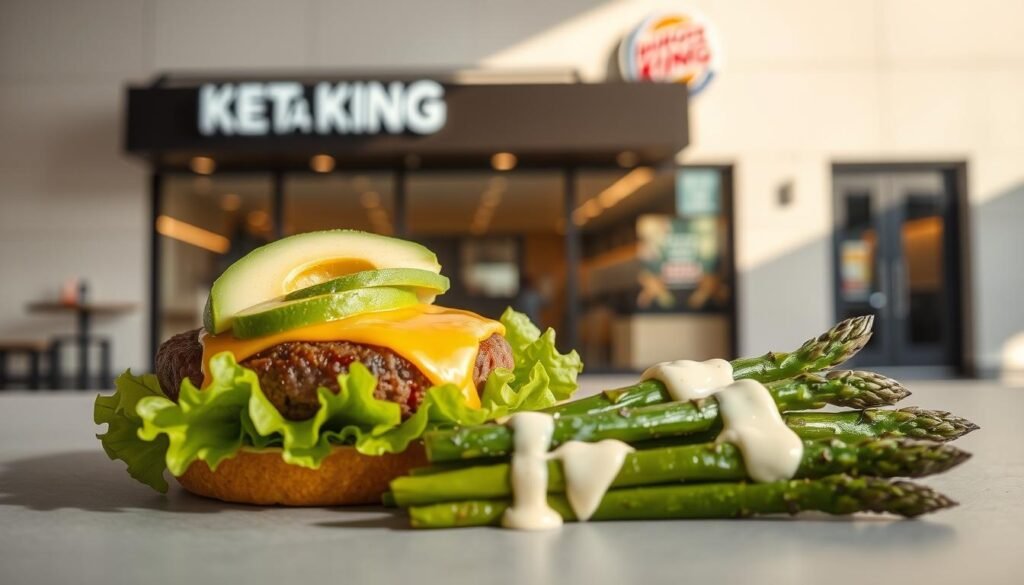
Take off the bun from a Whopper, Bacon Cheeseburger, or Bacon King to cut carbs quickly. This move keeps calories and protein close to the original.
For breakfast, try a Sausage, Egg & Cheese biscuit without the biscuit or a Croissan’wich without the croissant. These changes keep about 20 g of protein and reduce carbs a lot.
Avoid high-carb sides like fries, onion rings, and pancakes. Instead, choose applesauce or a side salad without croutons. This helps stay within low-carb goals.
Keto warnings: saturated fat and sodium content
Meat and cheese in Burger King items can be high in saturated fat and sodium. Even without buns, many items have high saturated fat. For example, the Bacon King and some Whoppers have over 30 g of saturated fat.
Sodium is also high in many protein-rich options. Some burgers and bacon items have over 1,000 mg of sodium without buns. Keep an eye on your daily sodium intake to avoid too much.
If you’re on a keto diet, use bun-free orders carefully. Balance them with lower-sodium, unsaturated-fat options at other meals. This protects your heart and kidneys.
Quick ordering checklist
- Choose bun-free burgers to lower carbs while keeping protein.
- Pick breakfast sandwiches without bread to retain about 20 g protein.
- Replace fries with applesauce or a side salad (no croutons).
- Watch saturated fat and sodium numbers in the Burger King nutritional content menu.
- Use bun-free swaps occasionally and balance daily fat and sodium across meals.
| Item | Typical Protein (g) | Carb Cut (g) When Bun Removed | Notes on Saturated Fat / Sodium |
|---|---|---|---|
| Whopper (no bun) | 25 | ~40 | High saturated fat; sodium often >1,000 mg |
| Bacon King (no bun) | 45 | ~45 | Very high saturated fat (mid-20s to 30s g); high sodium |
| Sausage, Egg & Cheese (no biscuit) | ~20 | ~30 | Moderate saturated fat; sodium elevated |
| Croissan’wich (no croissant) | ~20 | ~25 | Saturated fat varies by meat choice; watch sodium |
| Applesauce / Side Salad | 0–2 | 0 | Low saturated fat and sodium when salad has no dressing |
Protein-Focused Choices and Muscle-Friendly Options
Looking to boost protein without losing sight of Burger King menu calories? This section breaks down high-protein choices from the official nutrition matrix and points out kid-friendly options that help meet daily protein needs.
High-protein entrees deliver the muscle-building fuel many diners want. Double and Triple Whopper sandwiches lead with large protein counts: the Double Whopper provides about 48 g of protein while the Triple Whopper can reach roughly 67 g. Bacon King and Cheddar Bacon King pack near 61–64 g of protein, but they come with very high Burger King menu calories and sodium levels, so choose them sparingly.
Chicken items offer leaner protein choices. The Original Chicken Sandwich contains roughly 28 g of protein. Crispy Chicken Sandwich variants range from about 23–25 g of protein. For nugget lovers, a 10-piece Chicken Nuggets serving has near 20 g protein, while a 20-piece option provides about 39–40 g. Review Burger King nutrition facts to balance protein needs with calories and sodium.
For kids, King Jr. meals give smaller portions with clear nutrition trade-offs. A 4-piece Chicken Nuggets King Jr. offers about 8 g protein at roughly 170 kcal. Kids Oatmeal is about 170 kcal and provides a modest protein boost. Adding an 8 fl oz serving of fat-free milk contributes 9 g protein and about 90 kcal, helping meet daily targets with minimal prep.
PB&J Jamwich varieties deliver about 11 g protein but include higher carbs and sugars. Pairing a PB&J with fruit or applesauce improves nutrient balance while keeping Burger King menu calories in check. For adults wanting lean protein, prioritize single-patty burgers or grilled chicken sandwiches and swap fries for a side salad or apple slices.
Practical tips: pick grilled chicken over fried to lower saturated fat. Ask for no cheese or bacon to cut saturated fat and sodium. Choose water or unsweetened beverages to avoid extra liquid calories. Use the Burger King nutrition facts sheet on the restaurant site before ordering to compare protein and calories across items.
| Item | Price | Calories | Protein (g) | Vegan/Keto/Gluten-Free Options | Allergens |
|---|---|---|---|---|---|
| Double Whopper | $6.49 | 900 | 48 | Not vegan; low-carb if bun removed; not gluten-free with bun | Sesame, wheat, soy, egg (may contain milk) |
| Triple Whopper | $7.99 | 1,160 | 67 | Not vegan; bun removal lowers carbs; not gluten-free with bun | Sesame, wheat, soy, egg (may contain milk) |
| Bacon King | $7.29 | 1,150 | 64 | Not vegan; high-fat for keto caution; not gluten-free with bun | Sesame, wheat, soy, egg, milk |
| Original Chicken Sandwich | $5.49 | 660 | 28 | Not vegan; bun removal lowers carbs; not gluten-free with bun | Wheat, soy, egg, milk |
| Crispy Chicken Sandwich | $5.19 | 520 | 24 | Not vegan; bun removal helps low-carb choices; not gluten-free with bun | Wheat, soy, egg, milk |
| Chicken Nuggets (10 pc) | $3.99 | 440 | 20 | Not vegan; not keto-friendly due to breading; not gluten-free | Wheat, soy, egg, milk |
| Chicken Nuggets (20 pc) | $6.99 | 880 | 39 | Not vegan; high calories for keto; not gluten-free | Wheat, soy, egg, milk |
| King Jr. 4pc Nuggets Meal | $3.49 | 170 (without drink) | 8 | Not vegan; small portion not ideal for keto; not gluten-free | Wheat, soy, egg, milk |
| Kids Oatmeal | $2.19 | 170 | 4 | Vegan if no milk added; not keto; naturally gluten-free oats vary by facility | May contain milk, tree nuts (facility) |
| Fat-Free Milk (8 fl oz) | $0.99 | 90 | 9 | Not vegan; fits many diets except strict dairy-free | Dairy |
| PB&J Jamwich | $2.79 | 320 | 11 | Not vegan; high carbs; not gluten-free | Peanuts, wheat |
| Side Apple Slices | $0.99 | 35 | 0.5 | Vegan; low-carb caution for strict keto; gluten-free | None |
| Side Salad | $1.79 | 30 | 2 | Vegan if dressing excluded; low-carb friendly | May contain egg in dressing, milk in cheese |
Desserts and Drinks: Choosing Lower-Sugar Treats Using Burger King Nutritional Values
Looking for sweet treats and drinks that won’t break your calorie budget? This guide helps you pick wisely at Burger King. It uses clear nutritional values to compare dessert calories and drinks.

Soft-serve cones and single cookies are lighter options. A vanilla soft-serve cone has 170–200 calories, 22 grams of sugar, and 150 mg sodium. A single chocolate chip cookie has about 160 calories, 15 grams sugar, and 110–125 mg sodium. Remember, cookies are often sold in pairs, doubling the calories and sugar.
Many pies, sundaes, and cheesecakes have over 300 calories and 30–45 grams of sugar. Shakes and large sundaes are extreme: Oreo or chocolate shakes have 720–740 calories and over 98–101 grams of sugar. A strawberry shake has about 610–640 calories and 92 grams sugar. Avoid these if you want to limit sugar and calories.
Lower-sugar dessert picks
- Vanilla soft-serve cone — lower sugar and calories versus shakes.
- Single chocolate chip cookie — modest calories if you stop at one.
- Share larger desserts — split a pie or sundae to cut per-person Burger King dessert calories in half.
Best beverage choices to cut liquid calories
Water, unsweetened iced tea, and black coffee are zero-calorie choices. They show 0 kcal and no sugar on the Burger King drinks nutrition matrix. Diet sodas like Diet Coke or Coke Zero have near 0 kcal and are a low-impact option for fizzy flavor without sugar.
Fat-free milk is a good swap for protein and satiety. A typical serving is about 90 calories with roughly 9 grams of natural sugar and some protein. Use it when you need liquid calories for fullness or recovery after exercise.
| Item | Price (est.) | Calories | Vegan/Keto/Gluten-Free Options | Allergens |
|---|---|---|---|---|
| Vanilla Soft-Serve Cone | $1.49 | 170–200 | Not vegan, not keto, contains dairy | Dairy |
| Chocolate Chip Cookie (single) | $0.99 | ~160 | Not vegan, not keto, contains gluten | Wheat, Eggs, Dairy (possible) |
| Oreo Shake (small) | $3.99 | ~720–740 | Not vegan, not keto | Dairy, Wheat |
| Water | $0.00–$1.00 | 0 | Vegan, Keto, Gluten-Free | None |
| Unsweetened Iced Tea | $1.29 | 0–5 | Vegan, Keto, Gluten-Free | None |
| Diet Soda (Coke Zero) | $1.49 | 0–5 | Vegan, Keto, Gluten-Free | None |
| Fat-Free Milk (small) | $1.79 | ~90 | Not vegan, not keto | Dairy |
Use the Burger King nutritional values to compare items side-by-side. For fewer added sugars, skip shakes and choose a soft-serve cone or a single cookie. For drinks, pick water, unsweetened iced tea, or diet soda to minimize liquid calories while keeping hydration or carbonation.
Check the menu matrix before ordering to confirm exact Burger King drinks nutrition and dessert numbers for your location. Small swaps and sharing are simple tactics to lower total sugar and control Burger King dessert calories without giving up on treats.
Kids’ Meals, Sides, and How to Make Them Healthier with Burger King Nutritional Content
Looking for smarter choices for little appetites? This section breaks down Burger King kids meals and side options. You can pick items that balance taste with nutrition. Small swaps can lower sugar, sodium, and overall Burger King menu calories without taking away the fun.
Healthier components for children’s plates
King Jr. classics give simple choices. Kids Oatmeal is about 170 kcal. The 4pc Chicken Nuggets also run roughly 170 kcal and provide about 8 g protein. Pairing these entrées with a drink that adds protein can improve satiety.
Choose Fat Free Milk (8 fl oz, about 90 kcal, 9 g protein) to add calcium and protein. Capri Sun 100% Apple Juice is lower in calories at about 80 kcal, yet it increases sugar without the same protein benefit.
Avoid combo upgrades that enlarge portions. Upgrades can raise Burger King menu calories quickly and erase the advantage of a smaller kids’ entrée.
Choosing side items with better nutrition profiles
Mott’s Natural Applesauce is a compact, lower-calorie side at about 50 kcal. It beats small fries for calories and sugar control for many children.
The Garden Side Salad without dressing is roughly 60 kcal. Dressings vary a lot. Ken’s Lite Honey Balsamic Vinaigrette adds about 120 kcal and some sugar and sodium. Ken’s Ranch can add roughly 260 kcal and more fat.
Small French Fries are about 320 kcal when unsalted. Medium and large sizes jump to around 380 kcal and 430 kcal, respectively. Onion Rings range widely from about 150–500 kcal and often pack more sodium, so they are less suitable for a healthier kids’ plate.
Quick comparison for common kids’ sides
| Item | Calories | Protein | Notes |
|---|---|---|---|
| Mott’s Natural Applesauce | 50 kcal | 0 g | Low calorie, low sodium, easy portion |
| Garden Side Salad (no dressing) | ~60 kcal | 1–2 g | Add dressing sparingly to control calories |
| French Fries (small, unsalted) | ~320 kcal | 3–4 g | High calories; portion sizes increase Burger King menu calories fast |
| 4pc Chicken Nuggets (King Jr.) | ~170 kcal | 8 g | Lower-calorie protein option for kids |
| Onion Rings (small) | ~150–200 kcal | 2–3 g | Watch sodium; larger orders can be very high in calories |
Allergy and cross-contact guidance
Burger King notes that fried and broiled items may share equipment. Common allergens include milk, wheat, soy, and egg depending on the item. Check current allergen advisories before ordering to keep children safe.
Use the Burger King sides nutrition info to swap wisely. Choosing applesauce or a side salad plus milk can lower sugar and boost protein. These moves reduce Burger King menu calories for a family-friendly meal without sacrificing taste.
Foods to Avoid Based on Burger King Menu Calories and Nutrition Facts
Want to cut calories and keep your heart healthy at Burger King? This quick guide shows you what to avoid and offers better choices. Read the nutrition facts before you order to pick items that meet your goals.
Avoid the highest calorie items on the Burger King menu. These have a lot of saturated fat and sodium. The Triple Whopper with Cheese and the Bacon King are examples of high-calorie items.
Shakes and desserts have a lot of sugar. Oreo® and Chocolate shakes have 720–740 calories and 98–101 grams of sugar. A Strawberry shake has over 90 grams of sugar. These are high in sugar and should be avoided.
Breakfast platters and loaded biscuit sandwiches have hidden calories and sodium. The BK Ultimate Breakfast Platter has 930 calories and over 2,200 mg of sodium. A Double Sausage, Egg & Cheese Biscuit has 850 calories and over 2,500 mg of sodium. These values are too high for most people.
Be careful with condiments and sides. A packet of Ranch can add 140–260 calories and a lot of sodium. Onion ring dips and extra bacon also increase calories and sodium quickly. Treat sauces as optional extras.
Below is a comparison of common items to avoid, their calories, sodium, saturated fat or sugar, and better alternatives. Use Burger King nutrition facts to confirm values before ordering.
| Item | Calories | Key Nutrition Concern | Alternative | Allergens |
|---|---|---|---|---|
| Triple Whopper with Cheese | 1,130–1,220 kcal | Saturated fat 28–32 g; sodium 1,120–1,470 mg | Single Whopper without mayo | Wheat, Egg (mayo), Soy, Milk (cheese) |
| Bacon King / Cheddar Bacon King | 1,150–1,190 kcal | Saturated fat ~31–33 g; sodium up to 2,270 mg | Hamburger or BK junior burger | Wheat, Milk (cheese), Soy |
| BK Ultimate Breakfast Platter | ~930 kcal | Sodium ~2,230 mg; high fat | Egg and turkey sausage sandwich (no cheese) | Egg, Wheat, Milk (depending on prep) |
| Double Sausage, Egg & Cheese Biscuit | ~853 kcal | Sodium ~2,526 mg | Single sausage sandwich or egg white options | Wheat, Egg, Milk |
| Oreo® / Chocolate Shake | 720–740 kcal | Sugar ~98–101 g | Small soft-serve cone or black coffee | Milk, Soy (possible) |
| Strawberry Shake | 610–640 kcal | Sugar ~92 g | Diet beverage or unsweetened iced tea | Milk, Soy (possible) |
| Large Fries + Dipping Sauce | ~500–700 kcal (varies) | Added salt and sauce calories | Small fries or apple slices (when available) | None intrinsic; cross-contact possible |
| Loaded Sundaes / Specialty Desserts | 400–700 kcal | Sugar 40–100+ g | Single cookie or small soft-serve | Milk, Wheat, Nuts (varies) |
Use the table to spot high-calorie and high-sugar items that can ruin your meal plan. For the most accurate choices, check Burger King nutrition facts online or in-store before ordering.
Make simple swaps to cut calories and sodium without losing flavor. Choose single-patty burgers, skip cheese and mayo, pick unsweetened drinks, and avoid large shakes. These changes reduce calories and sodium while keeping your meal satisfying.
Practical Ordering Tips to Lower Calories and Sodium on the Burger King Menu
Want to cut calories and sodium but keep the taste? Making small changes and choosing the right sizes can help. Use Burger King’s nutrition facts to make quick, healthy choices.
Portion control and swaps
Go for single-patty burgers like the Hamburger, Cheeseburger, or Whopper Jr. They’re lower in calories and sodium. This way, you can enjoy a burger without overdoing it.
Choose 4-piece chicken nuggets instead of bigger orders. This cuts down on calories. Swap fries or onion rings for applesauce or a side salad to reduce calories even more.
Drink small sizes or water instead of big sodas. Avoid milkshakes to cut down on sugar and calories.
Customize smartly: sauces, toppings, and cooking methods
Limit mayonnaise, cheese, and bacon. They add a lot of fat and sodium. Use ketchup or BBQ in small amounts. A ketchup packet has about 10 kcal, while BBQ has 40 kcal. Ranch or Zesty sauces have over 100 kcal per serving.
Ask for no salt on fries if you can. For less carbs, ask for no bun. But remember, meat and cheese are high in fat and sodium, so check the nutrition facts.
Use online nutrition tools and ingredient lists before visiting
Look at the Burger King nutrition PDF or menu on bk.com before ordering. This helps you compare and choose the right foods for your diet. Use apps to track your meals and stay on track.
Remember, ingredients and nutrition can change. Always check the latest information to make informed choices.
| Item | Price | Calories | Dietary Options | Allergens |
|---|---|---|---|---|
| Hamburger (single) | $1.99 | 250 | None | Wheat, Soy |
| Whopper Jr. | $2.99 | 310 | None | Wheat, Soy, Egg (mayonnaise) |
| 4pc Chicken Nuggets | $1.49 | 190 | None | Wheat, Soy, Egg |
| Side Salad (no dressing) | $1.79 | 25 | Vegetarian | None |
| Applesauce | $0.99 | 50 | Vegan | None |
| Small Fountain Drink | $1.69 | 100 | None | None |
- Check Burger King nutrition facts for any special offers that change portion sizes.
- When in doubt, choose grilled items and ask for sauces on the side to control portions.
- Log meals with calorie trackers to keep Burger King calorie information aligned with daily limits.
Burger King Nutrition Menu: Compare Popular Items by Calories and Nutritional Values
Here, you can compare calories, sodium, allergens, and dietary suitability of common Burger King items. The chart below shows a consistent dietary breakdown. It pairs price guidance with verified Burger King food information to help plan meals.
Quick comparison helps spot high-calorie combos and choose swaps that meet daily targets. The example entries reflect typical Burger King menu calories and known nutrition ranges. Confirm local pricing and exact numbers at your store or the app before ordering.
| Item | Price (est.) | Calories | Vegan/Keto/Gluten-Free Options | Allergens |
|---|---|---|---|---|
| Whopper | $4.49–$5.99 | 660 kcal | Bun-free = lower carbs; not vegan | Wheat, soy, egg (may contain dairy) |
| Whopper Jr. | $2.49–$3.49 | 310–330 kcal | Bun-free option; not vegan | Wheat, soy, egg (may contain dairy) |
| Hamburger | $1.00–$2.79 | 240–250 kcal | Bun-free = keto-friendly; not vegan | Wheat, soy |
| Cheeseburger | $1.99–$3.29 | 280 kcal | Bun-free reduces carbs; not vegan | Wheat, milk, soy |
| Impossible Whopper | $5.99–$7.49 | 630 kcal | Plant-based patty but cooked on same grill; not strictly vegan | Wheat, soy, may contain milk |
| Bacon King | $6.49–$8.49 | ~1,150 kcal | Bun-free reduces carbs; high sat fat and sodium | Wheat, milk, soy |
| 4pc Chicken Nuggets | $1.49–$2.49 | 170–190 kcal | Not gluten-free due to breading and shared fryers | Wheat, soy, egg |
| French Toast Sticks (3pc) | $1.29–$2.99 | 230–340 kcal | Not vegan; contains gluten | Wheat, egg, milk |
| Soft-Serve Cone | $1.19–$1.99 | 170–200 kcal | Not vegan; contains dairy | Milk, wheat (cone) |
| Medium Fries | $1.99–$2.79 | ~380 kcal | Not gluten-free due to shared fryers | May contain wheat, soy |
How to read the numbers and apply them to daily goals:
- Daily Value context: use 2,000 kcal and 2,300 mg sodium as reference points when assessing Burger King nutritional values.
- Protein target: aim for roughly 20–30 g of protein per meal for fullness. Use Burger King food information to pick higher-protein options.
- Sodium check: items like the Bacon King and Impossible Whopper often push sodium near or above daily limits. Swap to smaller entrées or skip large sides.
Practical examples:
- A Whopper (660 kcal) plus medium fries (~380 kcal) and a medium soda (~200–300 kcal) can top 1,200–1,300 kcal in one sitting. That equals over half a 2,000 kcal day.
- Choose a Whopper Jr. with apple slices or a side salad to cut calories and boost vitamins while keeping protein moderate.
- Bun-free versions lower carbs and may suit low-carb plans, but watch sodium and saturated fat in processed patties and bacon.
Use the comparison above to balance cravings and goals. Refer to Burger King menu calories and Burger King food information when you customize orders. Small swaps can improve nutrition without losing flavor.
Conclusion
This guide helps you pick the best from Burger King’s wide menu. You can choose lower-calorie options like the Hamburger and Whopper Jr. There are also high-calorie items like the Bacon King and large platters. Use nutritional values to plan meals that fit your calorie and sodium needs.
Remember, controlling portions and choosing single-patty or grilled options is key. Add low-calorie sides like applesauce for more fullness. For keto diets, try bun-free swaps but watch the fat and sodium.
For kids, go for King Jr. meals with milk or applesauce. Avoid upsizing and check for allergens. Use the Burger King Nutrition Menu on bk.com or the app for updates.
By ordering smartly, Burger King can be part of a healthy lifestyle. Use nutritional values for smart swaps and portion control. This way, you can enjoy your meals while staying on track with your goals.